19.5.10


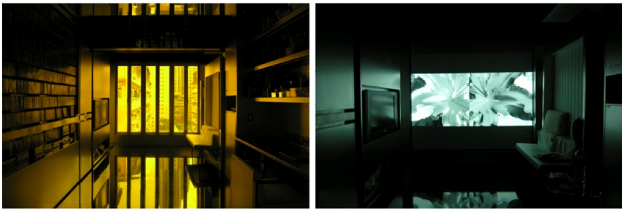
Architect Gary Chang’s apartment is located in downtown Hong Kong, and represents a remarkable example of interior refurbishment. With only 32 sqm, Chang studied the different distribution possibilities to optimize his space.


#1 ARCHITECTURE CLASSICS


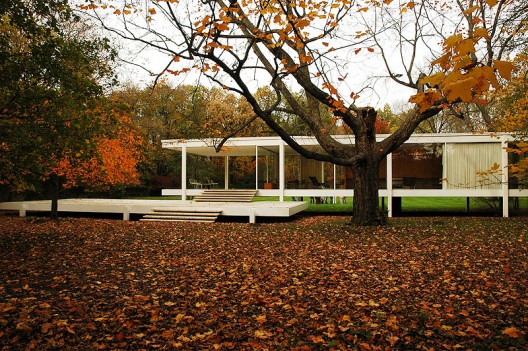
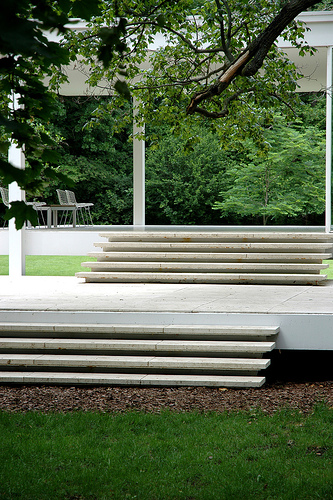
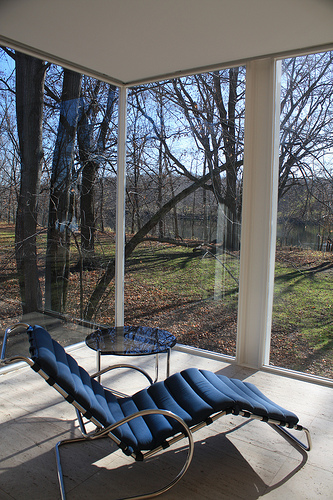
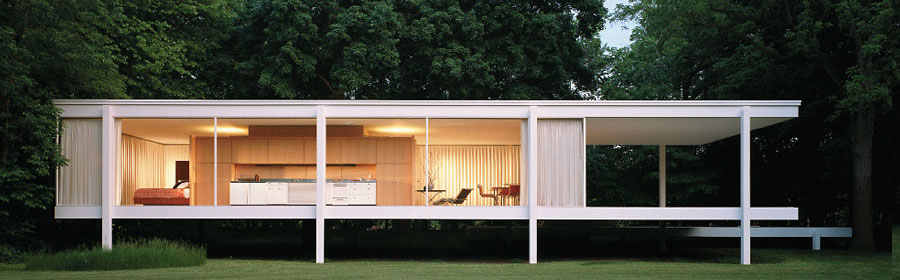
The Farnsworth House, built between 1945 and 1951 for Dr. Edith Farnsworth as a weekend retreat, is a platonic perfection of order gently placed in spontaneous nature in Plano, Illinois. Just right outside of Chicago in a 10-acre secluded wooded site with the Fox River to the south, the glass pavilion takes full advantage of relating to its natural surroundings, achieving Mies’ concept of a strong relationship between the house and nature.


 Mies explained this concept in an interview about the glass pavilion stating, “Nature, too, shall live its own life. We must beware not to disrupt it with the color of our houses and interior fittings. Yet we should attempt to bring nature, houses, and human beings together into a higher unity.”


Aside from walls in the center of the house enclosing bathrooms, the floor plan is completely open exploiting true minimalism. 
“If you view nature through the glass walls of the Farnsworth House, it gains a more profound significance than if viewed from the outside. That way more is said about nature—it becomes part of a larger whole.” 


17.5.10


British photographer David Parker investigates contemporary landscape through the medium of large-scale, black and white photography. Mostly known for his Siren series: long exposure shots of random islands and rocks in the middle of nowhere.
Conceptually, the work demonstrates contemporary art’s vital ability to affirm our physical and metaphysical interactions with the world around us.


14.5.10


The first "long movie" by Samuel Maoz,that more than talk about war or show the war, can make you feel the war.
An "you must see movie".


13.5.10


Kelsey Brookes is a former biochemist who attributes his raw style to an education system that "refuses to teach scientists to draw.” He abandoned biochemistry because, “I thought I was going to be there for a few months to make some money and get out of there. Four years later I was left wondering if I had become what I always despised – the funny guy at the water cooler, except not so funny. I was the confused, not so funny guy at the water cooler.” Science’s loss is art’s gain.


Facebook Badge

Labels

Archive

Followers